
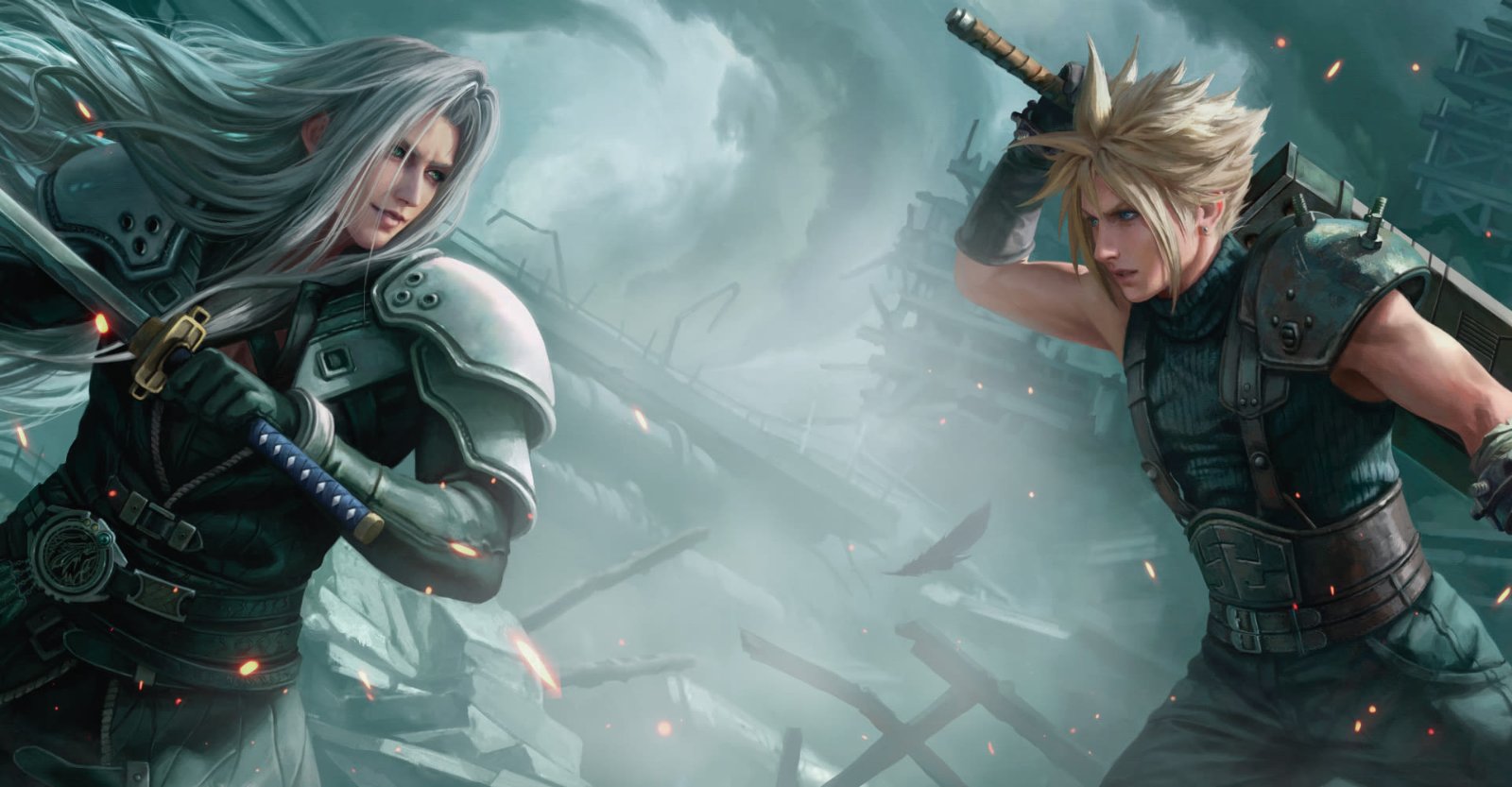
Final Fantasy looks like one enormous numbered saga, but most numbered games tell separate stories in separate worlds. There is no franchise-wide chronology. The useful watch-order question is which connected subseries you want to follow.
This guide lists the sixteen mainline games by first release year, then gives story order for the best-known connected arcs. It does not attempt to list every mobile game, expansion, port or spin-off.
Choose order
Release order
Mainline release order
- Final Fantasy
- Final Fantasy II
- Final Fantasy III
- Final Fantasy IV
- Final Fantasy V
- Final Fantasy VI
- Final Fantasy VII
- Final Fantasy VIII
- Final Fantasy IX
- Final Fantasy X
- Final Fantasy XI
Online Game
- Final Fantasy XII
- Final Fantasy XIII
- Final Fantasy XIV
Online Game; relaunched as A Realm Reborn in 2013
- Final Fantasy XV
- Final Fantasy XVI
Final Fantasy VII’s original continuity
For a first play, consider starting with Final Fantasy VII before Crisis Core. The prequel assumes you know major revelations from the original. Advent Children released before Dirge of Cerberus, so viewers following original release order can watch the film first.
- Crisis Core (2007 • Game) or Crisis Core Reunion (2022 • Remaster Game) — same prequel story
- Final Fantasy VII
- Dirge of Cerberus
- Advent Children
Animated Film optional continuation
Final Fantasy VII remake project
This project is a reimagining, not simply a graphics remake to insert into the original game’s continuity. Play Remake before Rebirth.
- Final Fantasy VII Remake
Game; expanded reimagining of the opening Midgar portion
- Final Fantasy VII Rebirth
Game; second released entry in the remake project
- The third remake-project game has not been released as of October 2026
Other direct sequel trilogies
- Final Fantasy X (2001 • Game) → Final Fantasy X-2 (2003 • Game sequel)
- Final Fantasy XIII (2009 • Game) → Final Fantasy XIII-2 (2011 • Game sequel) → Lightning Returns: Final Fantasy XIII (2013 • Game sequel)
No entries match this selection.
What about remakes?
Final Fantasy III (2006 • 3D Remake Game) retells the 1990 game. Final Fantasy VII Remake and Rebirth form a new multi-game interpretation of VII. Enhanced editions such as Intergrade and platform ports do not add another story chapter, so they are not separate entries in the main release list.
Peppermoon’s recommendation
Pick one numbered title that appeals to you and begin there. If you want the best-known shared world, play Final Fantasy VII and its related projects. You do not need to complete Final Fantasy I before starting Final Fantasy XVI.
Sources: Square Enix on standalone mainline games (https://www.square-enix-games.com/en_US/news/final-fantasy-xvi-everything-you-need-to-know); Square Enix on the VII remake project (https://ffvii.square-enix-games.com/en-us/games/rebirth); Square Enix on Crisis Core (https://www.square-enix-games.com/en_US/news/which-final-fantasy-spinoff-should-i-play).